
AITA for not allowing my half-sibling to attend our dad’s funeral?

A heartbreaking family conflict has started a big online discussion after a 25-year-old woman shared why she refused to let her half-siblings attend their father’s funeral.
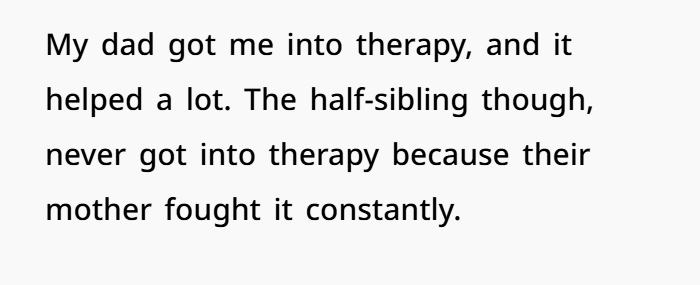
The woman said she was born after an affair, and that caused problems in her family for many years. She shared that her half-siblings blamed her for their parents’ divorce even when she was a little girl. According to her story, things never got better. She said they bullied her, treated her badly, and caused her a lot of emotional pain whenever they met.
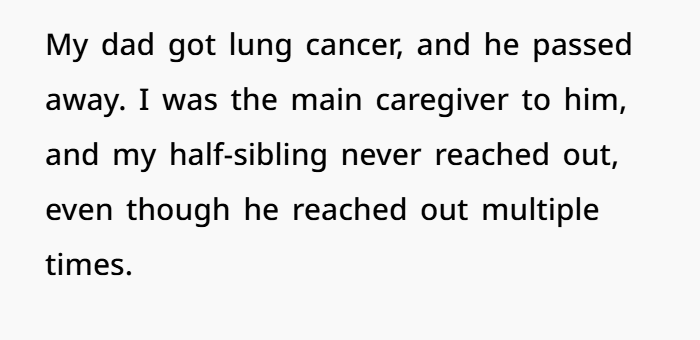
Later, her father was diagnosed with lung cancer. She became his main caregiver and looked after him until he passed away. She said her half-siblings stayed away during that time, even though their father reportedly tried more than once to reconnect with them.


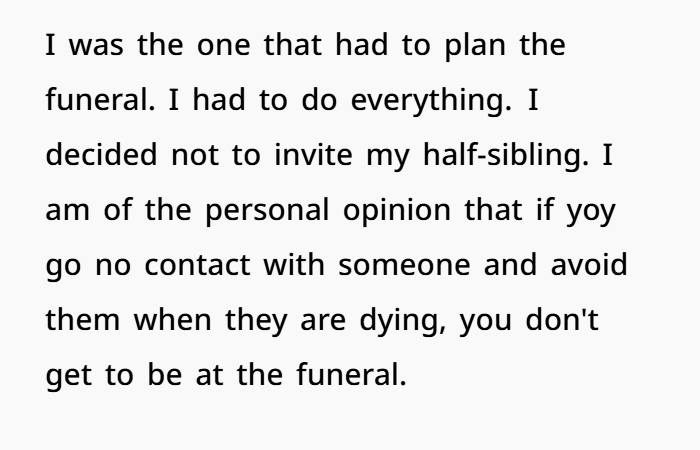
When it was time to plan the funeral, she decided not to invite them. It was a difficult choice, but she felt it was the right one based on what had happened over the years.
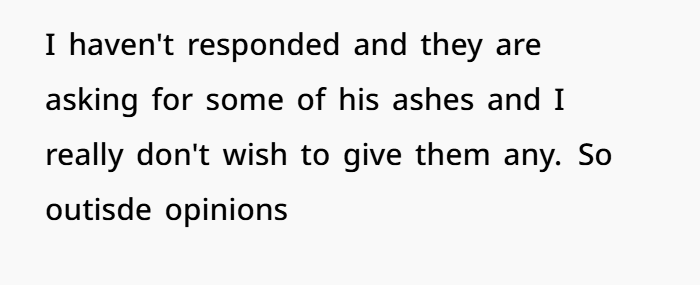
Now the family conflict has become even bigger. Her half-siblings are upset because they missed the funeral. They have also asked if they can receive some of their father’s ashes.

According to the story, the family problems began long before adulthood.
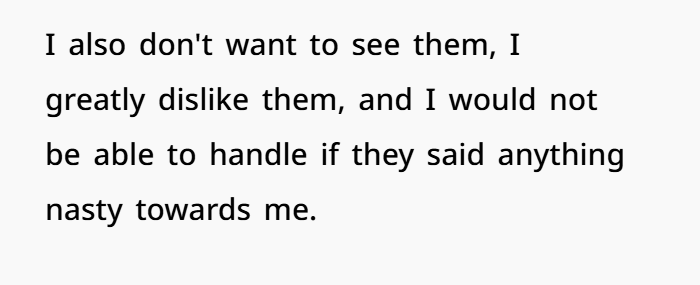
The woman says she was treated as the reason her father’s marriage ended, even though she had no control over the circumstances of her birth. She describes years of bullying from both of her half-siblings whenever they stayed with their father. One incident stood out more than the others. She claimed her older half-sister took her anxiety medication and laughed while she suffered a panic attack.
She eventually received mental health therapy, which she credits with helping her recover from years of emotional stress. Meanwhile, she believes her half-siblings never received similar support because their mother opposed therapy. Research shows that unresolved family conflict and long-term estrangement often become more difficult to repair without communication or professional support.
The relationship completely fell apart when she turned 18.
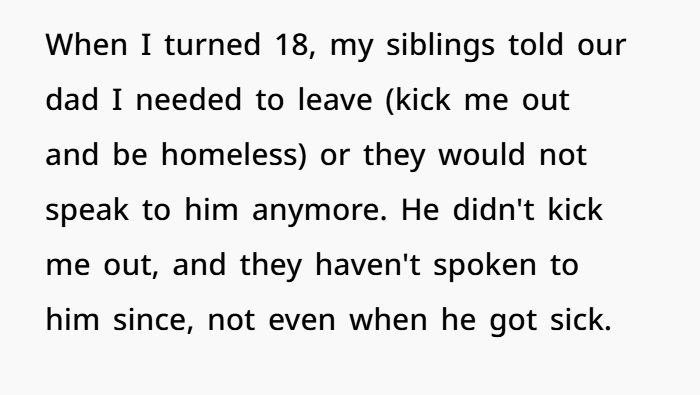
According to her account, the half-siblings told their father they would cut all contact unless he forced her to leave his home. Their father refused, and they reportedly stopped speaking to him from that point forward.
Years later, after the father developed lung cancer, the woman says she became his primary caregiver. She handled his daily care and later took responsibility for planning the funeral after his death. Studies on family caregiving show that relatives who remain involved often carry both the emotional and practical burden during a loved one’s final months.
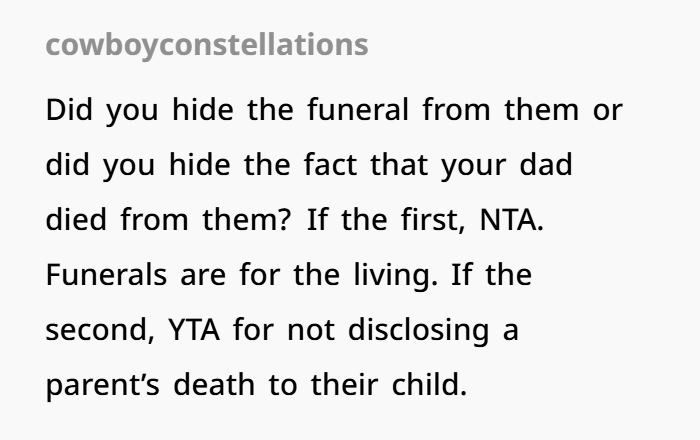
Before the funeral, she says she informed her half-siblings that their father had died. According to her update, she received no response and believes she had already been blocked.
Because of that silence, she decided not to invite them to the funeral. She believed that choosing years of no contact also meant giving up the right to attend the final farewell.
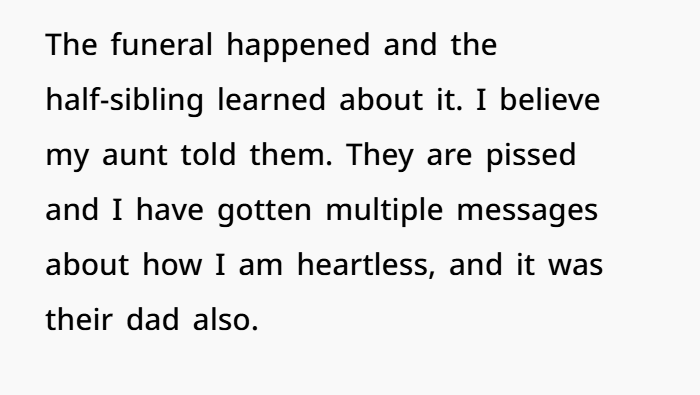
After the funeral ended, the half-siblings reportedly learned about it through another family member. They later contacted her, calling her heartless and arguing that they had every right to attend because he was their father too. They also requested a portion of his ashes, but she says she does not want to share them.
Family estrangement is becoming more widely discussed by researchers and mental health professionals. Studies suggest these situations are rarely caused by one single event. Instead, they often grow from years of unresolved conflict, painful experiences, broken trust, and failed attempts at reconciliation. They can also make end-of-life decisions and funeral arrangements far more emotionally complicated for everyone involved.
The story quickly divided readers online.
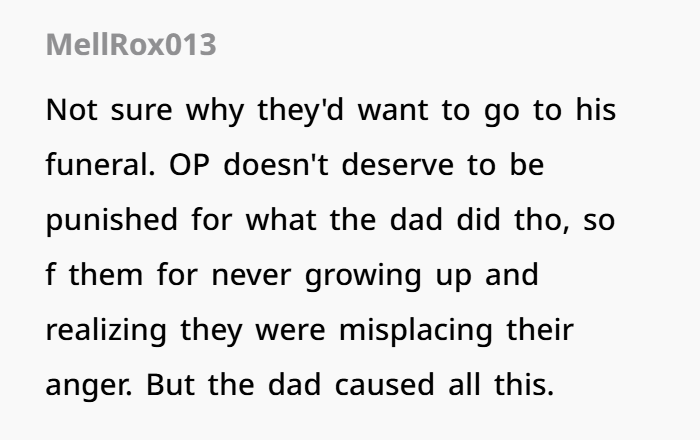
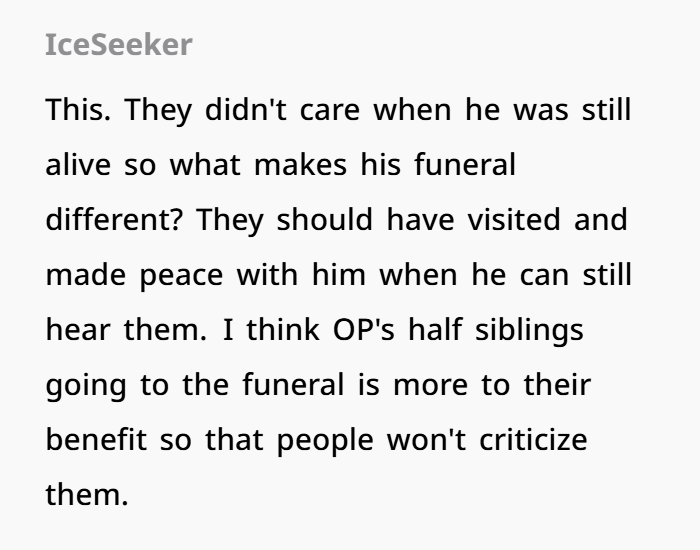
Many people argued that the woman carried the responsibility of caring for her father when nobody else would, making her decision understandable. Others believed that, regardless of past conflicts, the half-siblings should still have been given an opportunity to attend their father’s funeral because it marked the final chance to say goodbye.
See the comments to know what people said


This story shows how years of family conflict can shape the hardest decisions a person ever has to make. The woman believed her half-siblings gave up their chance to be involved after choosing years of no contact with their father, especially during his final illness. Her decision to keep the funeral private came from that belief and from her own painful experiences growing up.
At the same time, others feel that a funeral is about saying goodbye, no matter how complicated the relationship may have been. That difference in opinion is exactly why the story has sparked such a strong debate online.
In the end, there are no easy answers when families have been divided for years. Grief, regret, and unresolved emotions often collide after a loved one dies, leaving everyone with their own version of what they believe is fair. The discussion continues to remind readers that broken relationships can have lasting consequences, especially when there is no chance left to make peace.